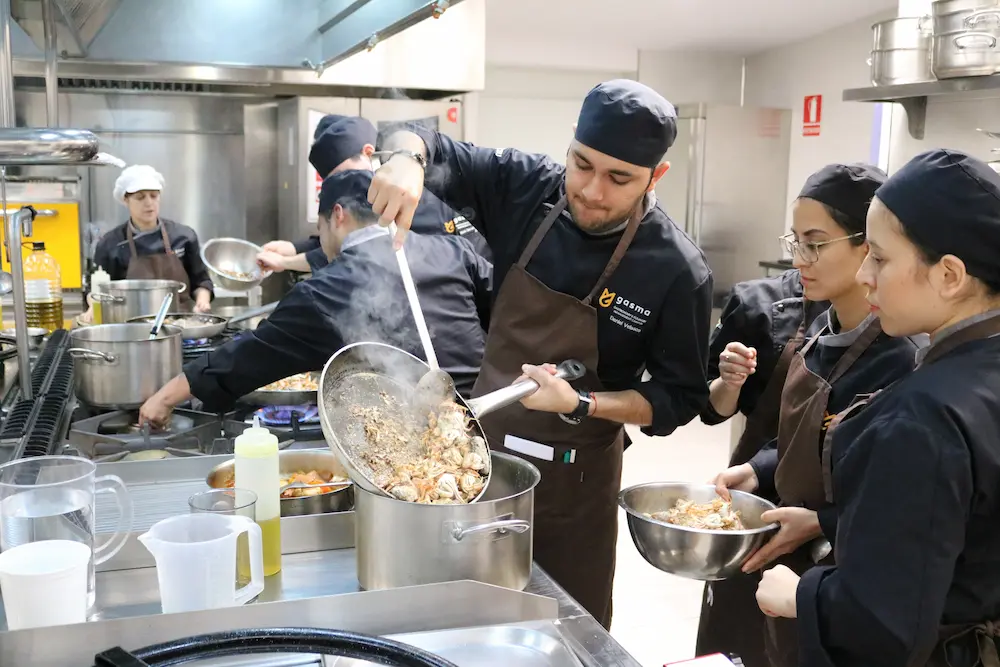
Can you imagine studying on a campus designed for you?
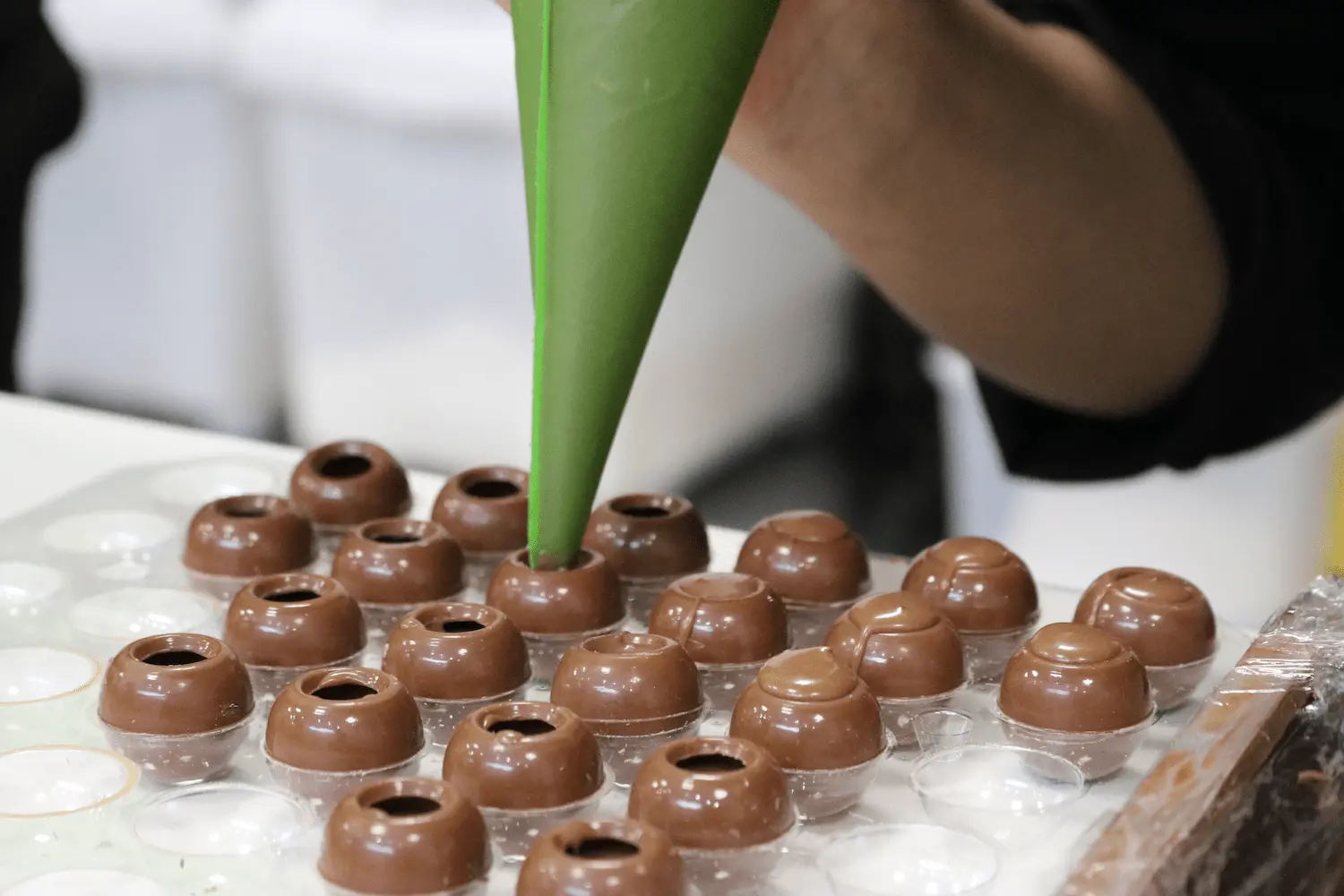
The GASMA campus is designed specifically for gastronomic education. Professional kitchens, technical classrooms, a teaching garden and work spaces with specialized equipment, tools and materials where students can experiment, practice and develop projects in conditions similar to a professional kitchen + emphasis on machinery. professional kitchen
Mediterranean gastronomy starts with a deep understanding of its product and the natural cycles that sustain it. In this module you'll build a shared foundation for understanding the Mediterranean Diet, recognized by UNESCO as Intangible Cultural Heritage, through its nutritional, cultural and territorial value.
You'll work with the most representative products of the Mediterranean Arc — olive oil, wines, cheeses and cured meats, bread, fish, seafood, seasonal fruits and vegetables — along with notions of applied nutrition and respect for the product. The goal is to develop solid judgment for interpreting Mediterranean cuisine from its origin.
Key learning outcomes:
Spanish cuisine is one of the Mediterranean's most influential voices, with an enormous diversity of products, techniques and regional traditions. In this module you'll go deeper into its identity, from market-fresh product to contemporary fine dining.
Through visits to fish markets, olive groves and local markets, you'll connect theory with the real origin of Spanish product. You'll analyze how today's chefs and producers reinterpret tradition from a creative, sustainable perspective.
Key learning outcomes:
French cuisine provides an essential technical foundation for understanding Mediterranean gastronomy at its most rigorous. In this module you'll study its fundamentals, its historical influence and its presence in the south of France.
You'll work on classic French technique applied to Mediterranean product, as well as its dialogue with contemporary creativity. The module focuses on precision, method and respect for seasonal product.
Key learning outcomes:
Italian cuisine reflects the diversity of the Mediterranean like few others, with strongly marked regional identities between the north and south of the country. In this module you'll discover that plurality through its techniques, products and traditions.
You'll go deeper into key Italian preparations and their connection to local product, pasta, oil and citrus fruits. The goal is to understand how each region translates the Mediterranean into its own culinary identity.
Key learning outcomes:
North Africa offers an essential perspective for understanding the Arab and Berber imprint on Mediterranean gastronomy. In this module you'll explore its spices, its produce and its traditional cooking techniques.
You'll work on preparations representative of this cuisine and its role in building Mediterranean identity. An approach that broadens students' outlook toward a plural gastronomy, less present in typical academic training.
Key learning outcomes:
Learning is completed with hands-on experiences in the field, where students connect with the producers and the territory that give meaning to Mediterranean cuisine. These outings let you observe real production processes and artisanal work.
It includes visits to fish markets, tours through Mediterranean orchards, routes through local markets, meetings at artisan cheese dairies, vineyard tours and visits to centuries-old olive groves. Each experience reinforces understanding of the product from its origin.
Key learning outcomes:
The Master's Thesis is where you'll bring together everything you've learned into an applied contemporary Mediterranean cuisine proposal. You'll develop a project that connects technique, creativity, product and professional viability.
The project will include defining the concept, the gastronomic offering, basic production planning and the final presentation. It will conclude with a written report and defense, demonstrating your ability to structure a coherent proposal that can be applied to the industry.
The internship lets you apply what you've learned in real environments within the gastronomy sector, joining top-level restaurants of the Mediterranean Arc. It's an opportunity to consolidate your technique, build confidence and understand the professional pace of the industry.
During this experience you'll take part in real kitchen processes, service organization and teamwork. You'll also develop skills such as responsibility, adaptation and professional judgment in high-demand environments.
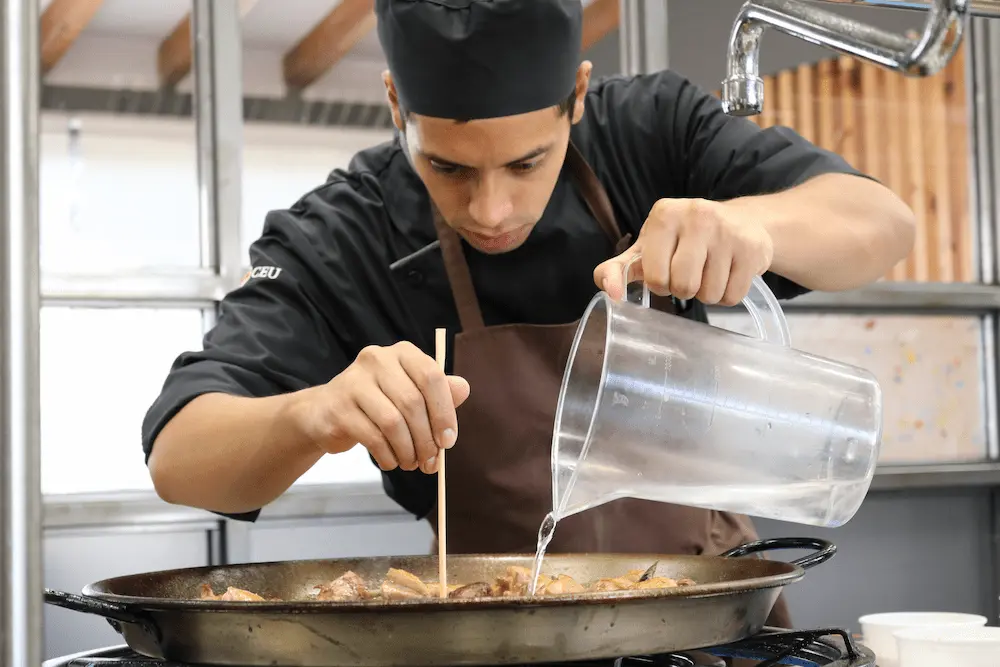
The master's applies the flipped classroom methodology, where theoretical content is covered before each session, so time on campus can be dedicated to what really matters: practicing, applying and making decisions in real environments.
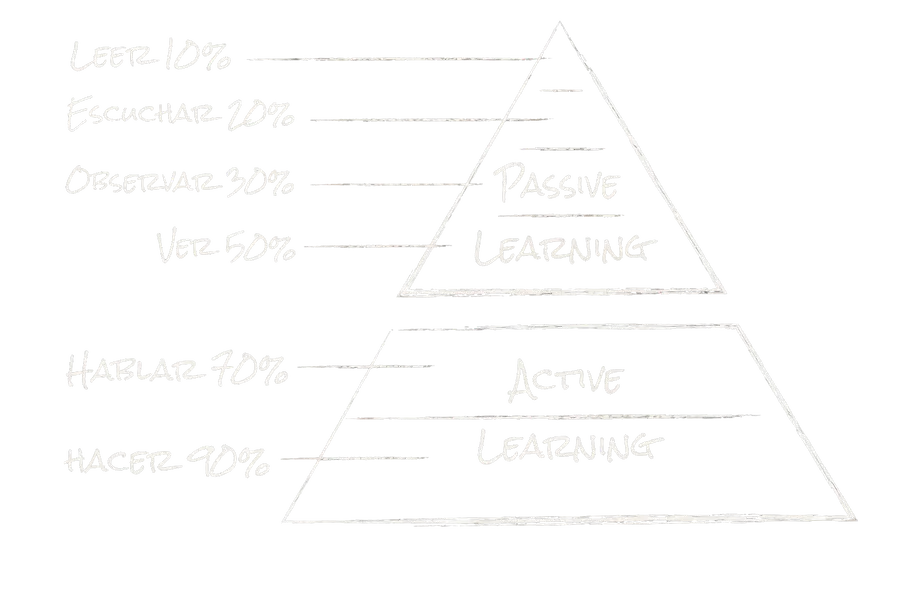
This approach is backed by learning science, which shows that retention increases with engagement. Reading or listening allows you to retain around 10%-20%, while hands-on practice in a real environment can reach up to 90%.
Extras included in the tuition:
If you're already sure you want to study with us, enrolling in our program is very easy.
You must fill in the admission form found on the 'RESERVE YOUR SPOT' button.
You'll then receive an email confirming receipt of your application, and we'll get in touch with you by email / call / WhatsApp to move on to the next stage of the process.
Within 24 hours of receiving your application, we'll invite you to a personal interview* with a member of the Gasma teaching or admissions team.
The goal of the interview is to get to know each candidate and assess their knowledge of the field and their aptitude for the program.
During this interview, we'll let you know if you need to provide any additional documents to complete your application.
*If you're unable to attend in person, the interview can also be held online via video call.
After the personal interview, the Admissions Committee will review your application. Once your candidacy has been evaluated, we'll let you know the outcome.
If you've been accepted... Congratulations! The admissions process is now complete.
To secure your spot, you'll need to pay the deposit and then send us the documentation required to complete your enrollment. Remember you'll need to send us the following:
If you have any questions, remember you can contact one of our Advisors:
“The process was very smooth and the team supported me every step of the way.”
— Gasma Student
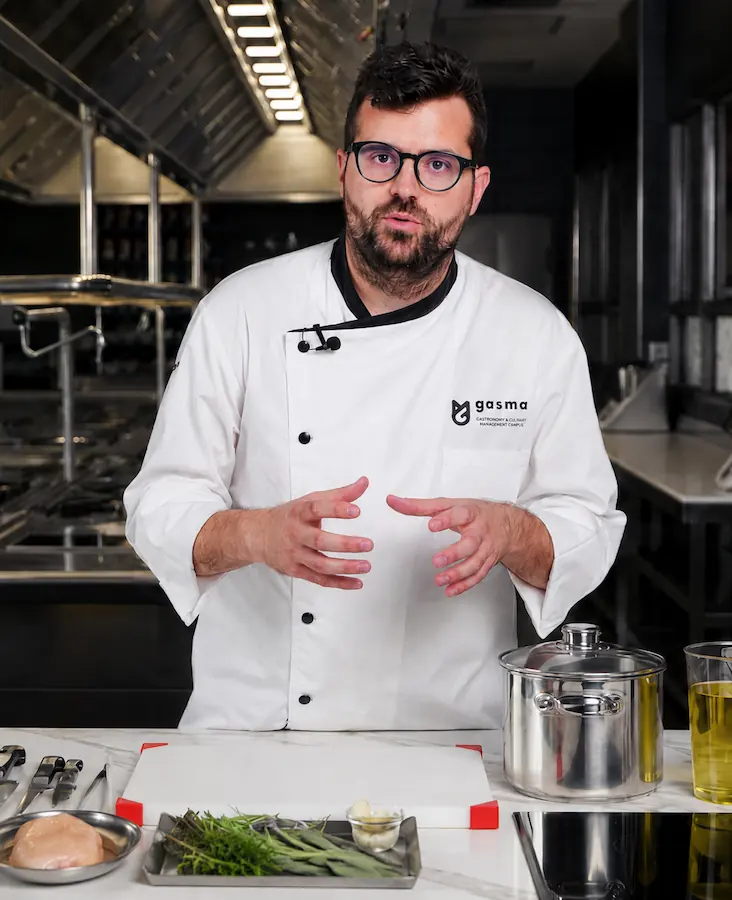
From Castellón to some of the country's most renowned kitchens. His experience alongside the Roca brothers, Kiko Moya and at places like Daluán shaped a career of high demands.
He later opened ReLevante, led Sonata 32 and today is part of the Gasma CEU-UCH teaching team, bringing his technical, creative and approachable vision to the new generations of professionals.
Perfect your technique in a 3-Michelin-star restaurant? Create in avant-garde restaurants? Master the sweet side of the kitchen in the best pastry shops?
More than 300 partner agreements await you. Three months in the world's best restaurants, working with elite chefs. You won't just learn techniques: you'll become part of real teams, absorbing the knowledge of those at the top.
An experience that will shape your career.











Find answers to the most common questions about the program.
The Master's of the Mediterranean Arc is an on-campus program from Gasma CEU-UCH (Castellón, Spain) that trains professionals to interpret Mediterranean gastronomy from a contemporary, creative and sustainable perspective. It combines theoretical and practical training on campus with educational visits to fish markets, olive groves, markets and vineyards, along with an internship period at top-level restaurants.
The master's lasts 6 months in an on-campus format: 3 months of theoretical and practical training at Gasma and 3 months of professional internships at top-level restaurants.
It prepares you to work at renowned Michelin-starred restaurants, in fine dining and signature cuisine, gastronomic and scientific research, sustainability and gastronomic innovation consulting, product and culinary experience development, and entrepreneurial projects tied to the Mediterranean.
The master's is 100% on-campus, since it's built around hands-on work, direct interaction with instructors, and preparation in a real kitchen.
While the online format can be useful for basic or theoretical training, GASMA's model is designed for those who want an intensive on-campus specialization focused on technique, innovation and practical experience.
Our international student body keeps growing. We have students from more than 85 nationalities. European students don't need a visa to come study in Spain. Non-European students, however, must obtain the corresponding visa that includes authorization to stay in the country.
Students from certain countries are exempt from needing a visa as long as their stay in Spain doesn't exceed three months.
The visa must be requested and issued at Spanish Consular Offices abroad. Once in Spain, Gasma offers non-EU students the optional International Fee service: with it, they can apply for the foreign student card through the Immigration Office or the corresponding police station within one month of their arrival.
