You have seen it in good restaurants: someone comes to the table, listens to what you ordered and recommends the right bottle. That person is the sommelier, and the job goes far beyond pouring wine. If you are asking what is a sommelier, here are the duties and the route to get there.
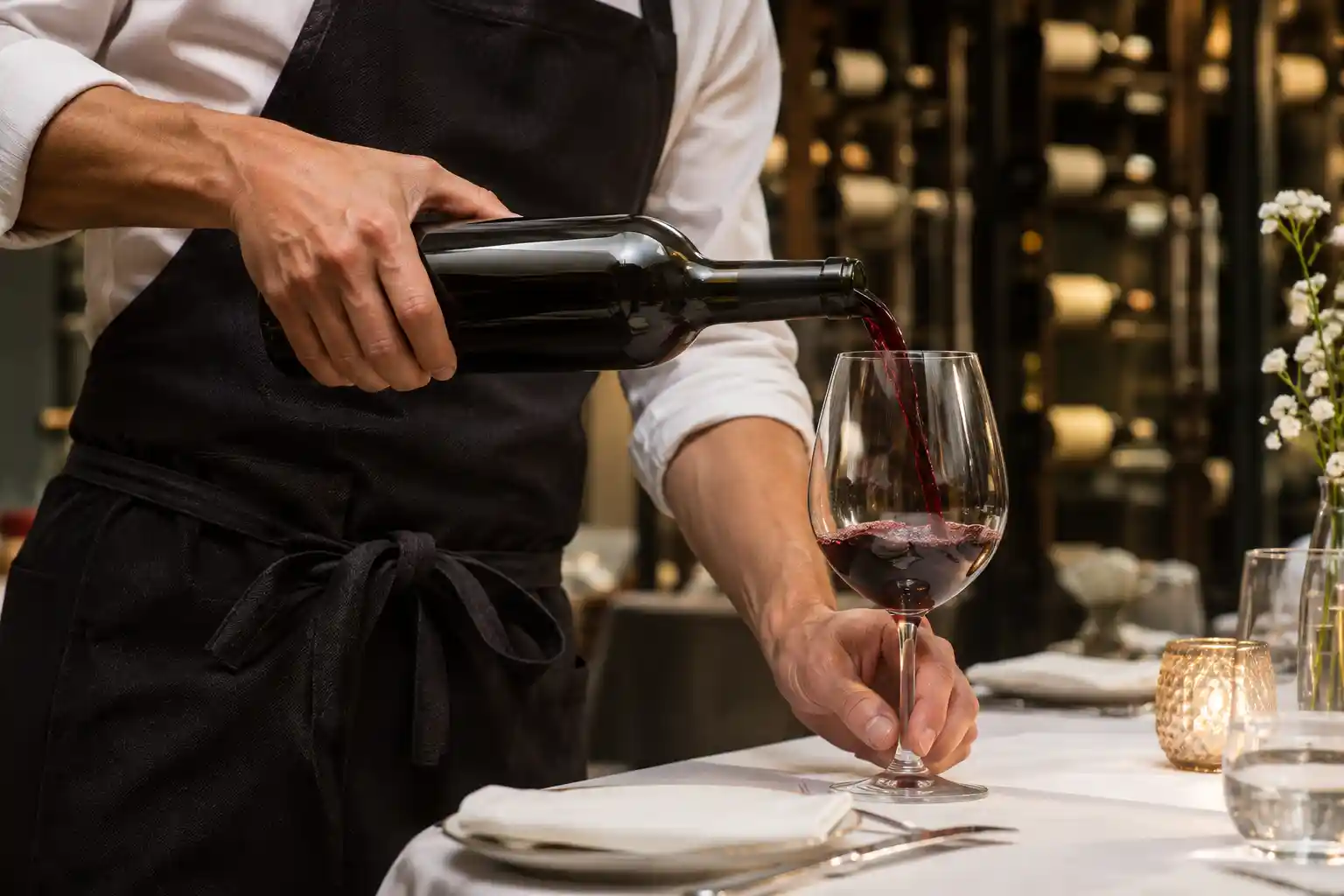
A sommelier is a professional expert in wine and other drinks who, in a restaurant or hotel, manages the cellar, builds the beverage list and recommends the right drink for each dish. The role combines technical wine knowledge with dining room service and commercial skill.
Let us look at what the job involves, which skills it needs and how people train for it.
In Spain the word is sumiller, a Spanish form of the French sommelier. The Spanish language dictionary describes the sommelier as an expert in wines and spirits who, in large hotels and restaurants, suggests the right drink to guests for the occasion. The real job covers much more:
It is a profile halfway between technical knowledge and hospitality.
A winemaker works on producing the wine. A sommelier focuses on the commercial side, on guest service and on promoting wine culture. Both know the product, but one makes it and the other brings out its value at the table.
A trained palate is necessary, but it is only the base. A good sommelier communicates clearly, listens to guests without imposing taste and understands the kitchen well enough to pair. Sommeliers also keep studying, because wine lists and producing regions change every year.
Teamwork counts as much as tasting. Without coordination between kitchen and dining room, even the best recommendation never reaches the table.
Does wine and wine service appeal to you?
See how it is taught in the Bachelor’s Degree in Gastronomy at GASMA.
There is no single path. Some people start in the dining room and train later, while others study first and arrive with a theoretical base. What matters is to combine theory, tasting and practice in real service.
WSET, the Wine & Spirit Education Trust, offers wine qualifications at four progressive levels through a network of course providers in more than 70 countries, according to its official website. The top level is a Diploma.
The WSET Level 1 Award in Wines is designed for beginners. It covers the main wine types and styles, common grapes, how to store and serve wine, the principles of food and wine pairing and tasting with the WSET systematic approach. It requires a minimum of six hours of study with a course provider, in a classroom or online, and it is assessed with a closed-book exam of 30 multiple-choice questions. It has no entry requirements.
The curriculum of GASMA’s Bachelor’s Degree in Gastronomy includes Wines and Wine Making in the second year, worth 6 ECTS, and Wines and Wine Cellar Management in the third year, worth another 6 ECTS. In the Spanish curriculum they appear as Sumillería and Sumillería y Gestión de Bodega. Students who complete the degree also obtain WSET Level 1, a starting credential if you later want to continue to the higher levels with an authorized course provider.
That training sits alongside business management, marketing and entrepreneurship, so you leave with a view of the dining room and of the business.
Yes. Sumiller is the Spanish form of the French word sommelier.
No. They are different professions: a winemaker focuses on producing the wine, while a sommelier focuses on service and the commercial side.
It requires a minimum of six hours of study with a WSET course provider, in a classroom or online. The assessment is a 30-question multiple-choice exam.
The role is common in restaurants and hotels. With the right training, it also extends to cellar management and beverage list design.
Knowing wine opens doors in the dining room, in restaurant management and in your own projects. GASMA is the Gastronomic Campus of CEU Cardenal Herrera University in Castellón, Spain, and builds wine service into a degree that combines culinary training and management. The first year has an English-language track for international students, with training in Spanish, and from the second year classes are mainly in Spanish.
Bachelor’s Degree in Gastronomy | Visit the campus | Request information