Signature cuisine is one of the fundamental pillars of modern gastronomy and also a key element in the training of those who seek to develop their own style within the culinary world.
Signature cuisine plays a leading role in GASMA’s university degree in gastronomy, as it allows future chefs to understand how culinary technique, creativity and personal identity converge to bring unique gastronomic concepts to life.
It not only teaches how to perfect the fundamentals, but also how to reinterpret them through innovation and culinary avant-garde, shaping chefs who are able to express themselves through their dishes.
Signature cuisine goes far beyond the preparation of delicious dishes. It is a culinary expression that combines technique with the chef’s creativity, using ingredients and techniques from traditional cuisine but in a more avant-garde and innovative way, creating unique and memorable dishes that convey their vision and personal style.
In essence, the meaning of signature cuisine is to create unique dishes that bear the distinctive signature of the chef who designed them, becoming the culmination of passion, creativity and culinary mastery on a plate.
Moreover, in creative cuisine the visual presentation of dishes takes on enormous importance, as good presentation is almost as important as the flavour of the food.
In short, the goal of signature cuisine is for diners to enjoy a unique and playful gastronomic experience, through innovative, one-of-a-kind dishes that are completely different from those found in a conventional restaurant.
Although it is true that this style of cooking has experienced a tremendous boom in recent years, the reality is that the origin of signature cuisine dates back to the 1970s, when a culinary revolution took place, especially in Spain, led by iconic figures such as chef Ferran Adrià and his legendary restaurant “El Bulli”, which marked a before and after in gastronomy.
The roots of creative cuisine can also be found in France, in a movement known as “nouvelle cuisine”, which emerged as a response to classical French cuisine. It was characterised by lighter, more refined dishes that reinvented traditional recipes and set the gastronomic trend for the following decades.
In the early days of signature cuisine, chefs began to question traditional culinary rules and to experiment with new techniques and flavours, creating their own interpretations of classic dishes. This inspired chefs around the world until it became the benchmark culinary style at an international level.
The differences between signature cuisine and traditional cuisine are fundamental in modern gastronomy. While traditional cuisine seeks fidelity to the original recipe and the preservation of historic flavours, signature cuisine prioritises innovation and the chef’s interpretation. Personalised dishes are the norm, aiming to surprise with new textures, techniques and a unique culinary narrative.
This distinction is analysed in depth in the specialised culinary master’s degrees available at GASMA, such as the Master’s in Avant-Garde Cuisine, preparing professionals to lead this culinary vanguard.
Signature cuisine is defined by a series of traits that elevate it to the category of culinary art:
This is the central axis of what we call signature cuisine. Each dish is a reflection of the chef’s inspiration, an expression of their own style and personal story. The dish is the cook’s signature.
Signature cuisine makes full use of the most advanced signature cooking techniques, such as spherification, deconstruction or low-temperature cooking, allowing for unexpected textures and sensations.
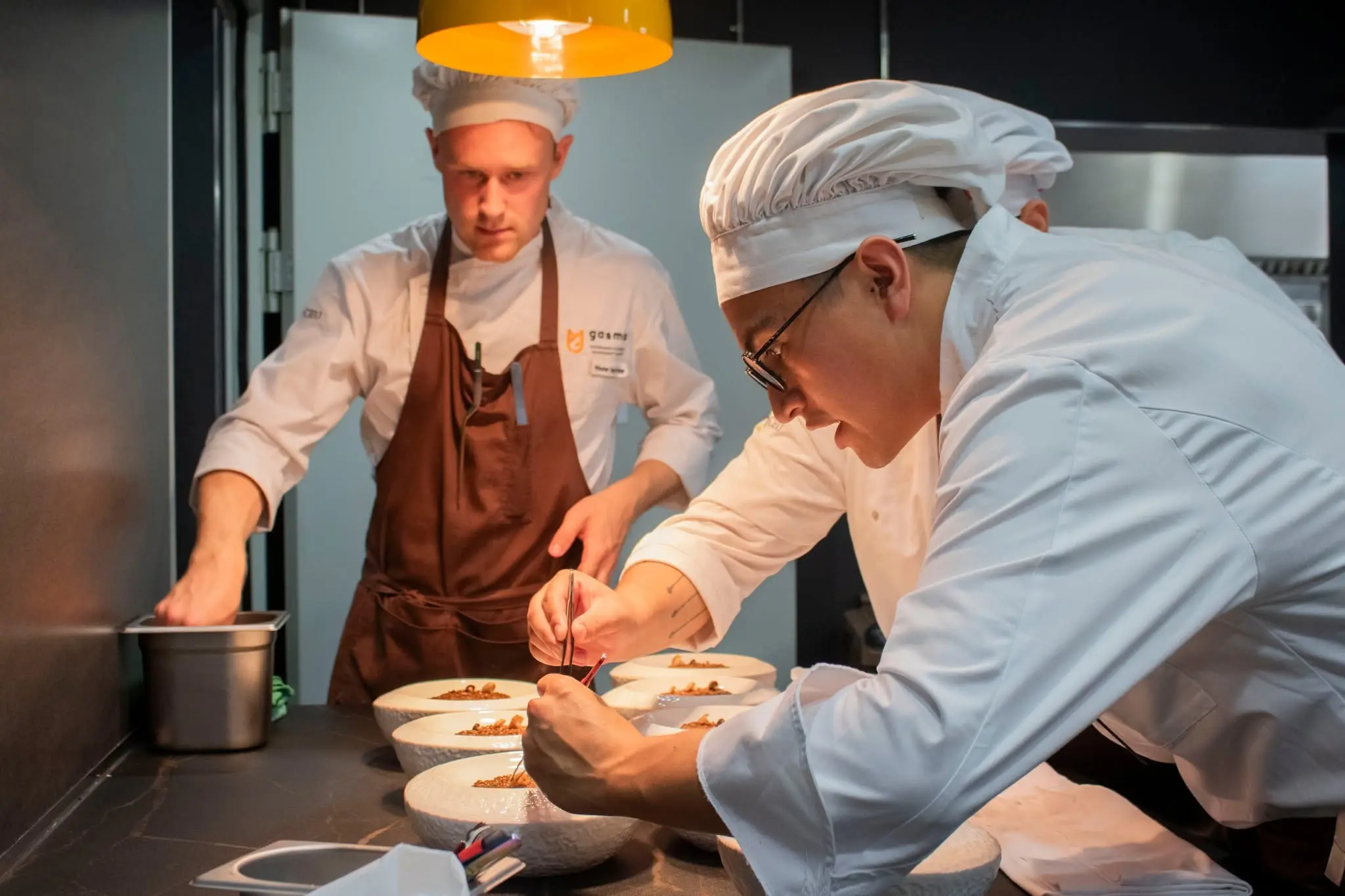
Plating in signature cuisine is an artistic discipline. The goal is a visual impact that complements flavour, with compositions, colours and shapes that tell a story or convey a concept. Visual detail is crucial.
Although the product itself is respected, signature cuisine is not afraid to experiment with unusual combinations, using high-quality ingredients, often local or exotic, to create distinctive flavours.
The aim is to stimulate all the senses, offering a holistic gastronomic experience. Ambience, service and often food and wine pairings are carefully considered to enhance sensations.
The question “what is a signature dish?” is answered through identity. A signature dish is a culinary creation that bears the unmistakable imprint of the chef. It is not just a recipe, but a unique creation born from the chef’s inspiration and personal expression.
Many great signature chefs have gone down in history for their creations, demonstrating the potential of this gastronomic trend. Iconic examples include Ferran Adrià’s “deconstructed omelette”, which broke down a classic in order to reinvent it, or Joël Robuchon’s “lobster parmentier”.
In the Spanish culinary scene, Joan Roca with his emotional cuisine, Andoni Luis Aduriz with his constant experimentation, and Quique Dacosta with his landscape-inspired cuisine are clear benchmarks in signature gastronomy.
A dish is considered “signature” when:
Signature cooking techniques are the language through which chefs bring their vision to life.
Techniques such as spherification, gelling or the use of liquid nitrogen, popularised by Ferran Adrià’s team and other leading figures like Dabiz Muñoz or Massimo Bottura, are essential for creating new textures and temperatures.
Plating goes beyond simple arrangement. It is a composition that may be minimalist, architectural or chaotic, always seeking a visual detail that forms part of the dish’s culinary narrative.
Conceptual cuisine focuses on ensuring that the dish conveys an idea, a memory or a specific feeling, going beyond taste to integrate hearing, sight and smell. The gastronomic proposal becomes a complete work of art.
Signature chefs are the stars of this style of gastronomy, each with their own distinctive approach.
Considered the father of modern avant-garde cuisine, Ferran Adrià transformed the way cooking is understood worldwide, using science for experimentation and the development of signature cooking techniques.
Joan Roca, together with his brothers at El Celler de Can Roca, is renowned for cuisine that is deeply rooted in Catalan tradition yet framed within a modern gastronomic vision that appeals to memory and emotion.
Chefs such as Virgilio Martínez (Peru) and Gastón Acurio have used signature cuisine to explore the biodiversity of their countries, employing culinary technique to tell a story of cultural identity, just as Quique Dacosta does with his territory-driven cuisine.
No. Fine dining or haute cuisine refers to a standard of quality, luxury, service and sophistication, often following classical or established rules and recipes. Signature gastronomy is a creative philosophy. A restaurant may practise signature cuisine and also be haute cuisine, but not every fine-dining restaurant practises signature cuisine. The key to signature cuisine lies in personal expression and originality, whereas haute cuisine focuses on perfect execution and luxury.
In signature cuisine, the inspiration and vision of the head chef are the driving force behind the signature recipe. The kitchen team executes this singular vision. In classical haute cuisine, the focus is more on the flawless execution of an established body of recipes, regardless of the individual chef at any given time, although today the two are often hard to distinguish.
A signature cuisine restaurant offers more than just a meal; it offers a journey. Diners enjoy personalised dishes they will not find anywhere else, the result of intense experimentation and creativity. It is one of the main gastronomic trends for those seeking a profound experience.
Each signature dish has an undeniable cultural and artistic value. It is a form of ephemeral art that tells a story, conveys an emotion and showcases the talent of the great signature chefs of the world.