Can you imagine learning on a campus designed for you?
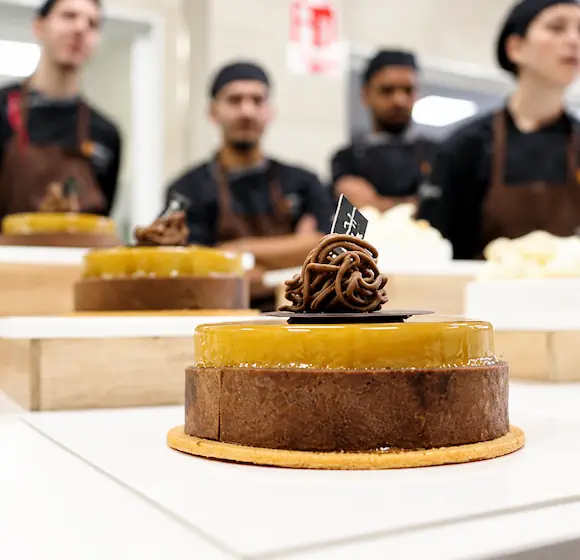
The GASMA campus is specifically designed for gastronomic education. Professional kitchens, technical classrooms, a teaching garden and work spaces with specialized equipment, tools and materials where students can experiment, practice and develop projects in conditions similar to a professional kitchen.
From product fundamentals to professional cooking: a complete journey to develop technique, judgment, innovation and your own culinary identity.
You will work on technical preparations designed for restaurant desserts, learning to control mousses, compotes, jellies, glazes and multi-layer assembly. The focus will be on achieving stable, clean pieces adapted to the pace of service.
Learning keys:
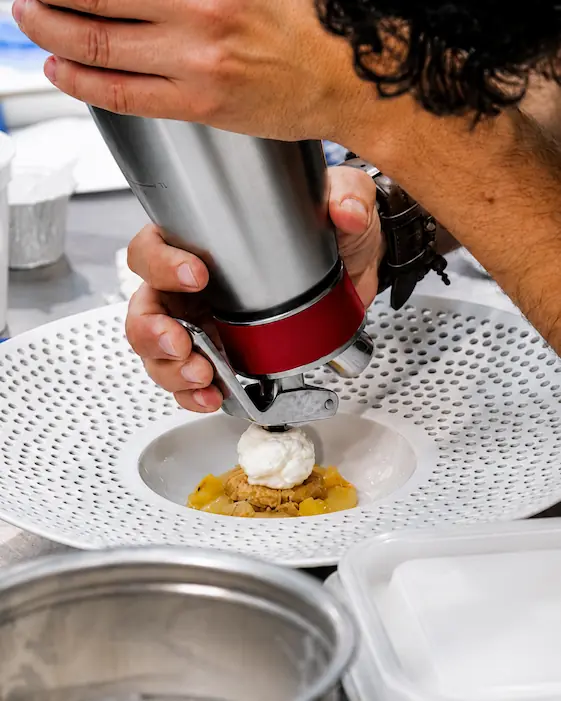
You will go deeper into key tools for expanding the restaurant dessert repertoire, from chocolate and bonbon-making to contemporary ice cream. You will also work with resources such as molds, technical ingredients, whipped cream siphons, nitrogen and new meringues.
Learning keys:
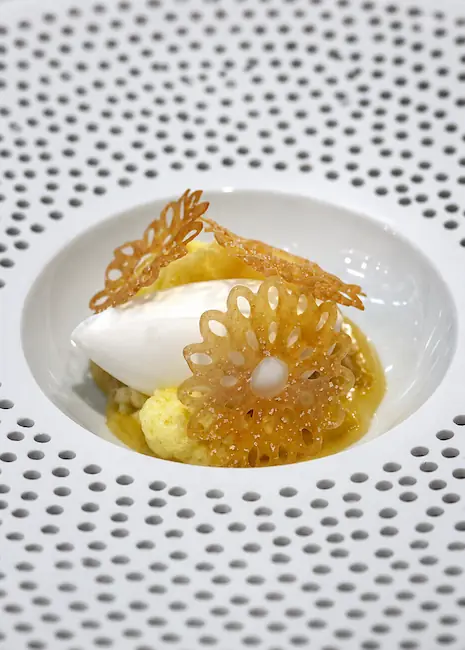
You will learn to create restaurant desserts, integrating technique, sensory balance, aesthetics and pass logic. You will work on creations that form part of a complete gastronomic experience, from the pre-dessert through to the petit four.
Learning keys:
You will explore new ways of building the sweet offering in food service, incorporating pairings, specialty coffee, lightened pastry, intolerances and vegan pastry. The goal is to adapt the dessert to new diners without losing technique or coherence.
Learning keys:
You will develop a personal gastronomic concept in which you will integrate the knowledge and techniques covered throughout the program. This project will let you practically apply judgment, technique and the ability to structure a coherent, current and well-resolved concept.
The program follows the flipped classroom methodology, where theoretical content is covered before each session, so that time on campus can be dedicated to what really matters: practicing, applying and making decisions in professional settings.
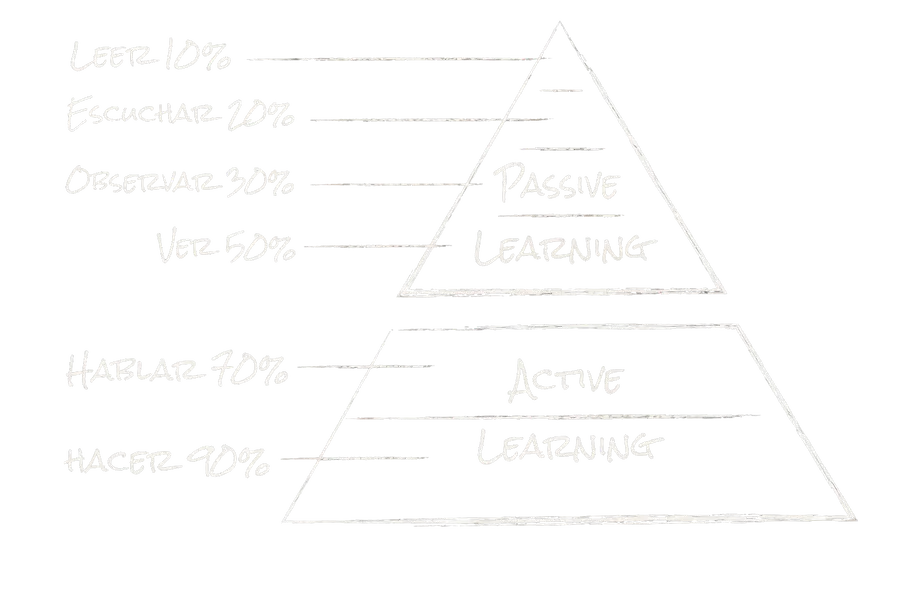
This approach is grounded in learning science, which shows that retention increases with engagement. Reading or listening allows you to retain around 10%–20%, while practice in a real environment can reach up to 90%.
Extras included in tuition:
If you're already sure you want to study with us, enrolling in our program is very easy.
You need to fill out the admission form, which you'll find on the 'RESERVE YOUR SPOT' button.
You will then receive an email confirming receipt of your application, and we will contact you by email, phone call or WhatsApp to move on to the next phase of the process.
Within 24 hours of receiving your application, we will invite you to a personal interview* with a member of Gasma's teaching or admissions team.
The purpose of the interview is to get to know candidates and assess their knowledge of the sector and their suitability for the program.
During this interview, we will let you know if you need to provide any additional documents to complete your application.
*If you are unable to attend in person, the interview can also be held online via video call.
After the personal interview, the Admissions Committee will assess your application. Once your candidacy has been evaluated, we will let you know the result.
If you have been accepted… Congratulations! The admissions process is complete.
To secure your spot, you must formalize payment of the reservation and, afterward, send us the documentation needed to complete your enrollment. Remember that you will need to provide the following:
If you have any questions, remember you can contact one of our Advisors:
“The process was very smooth and the team supported me every step of the way.”
— Gasma Student
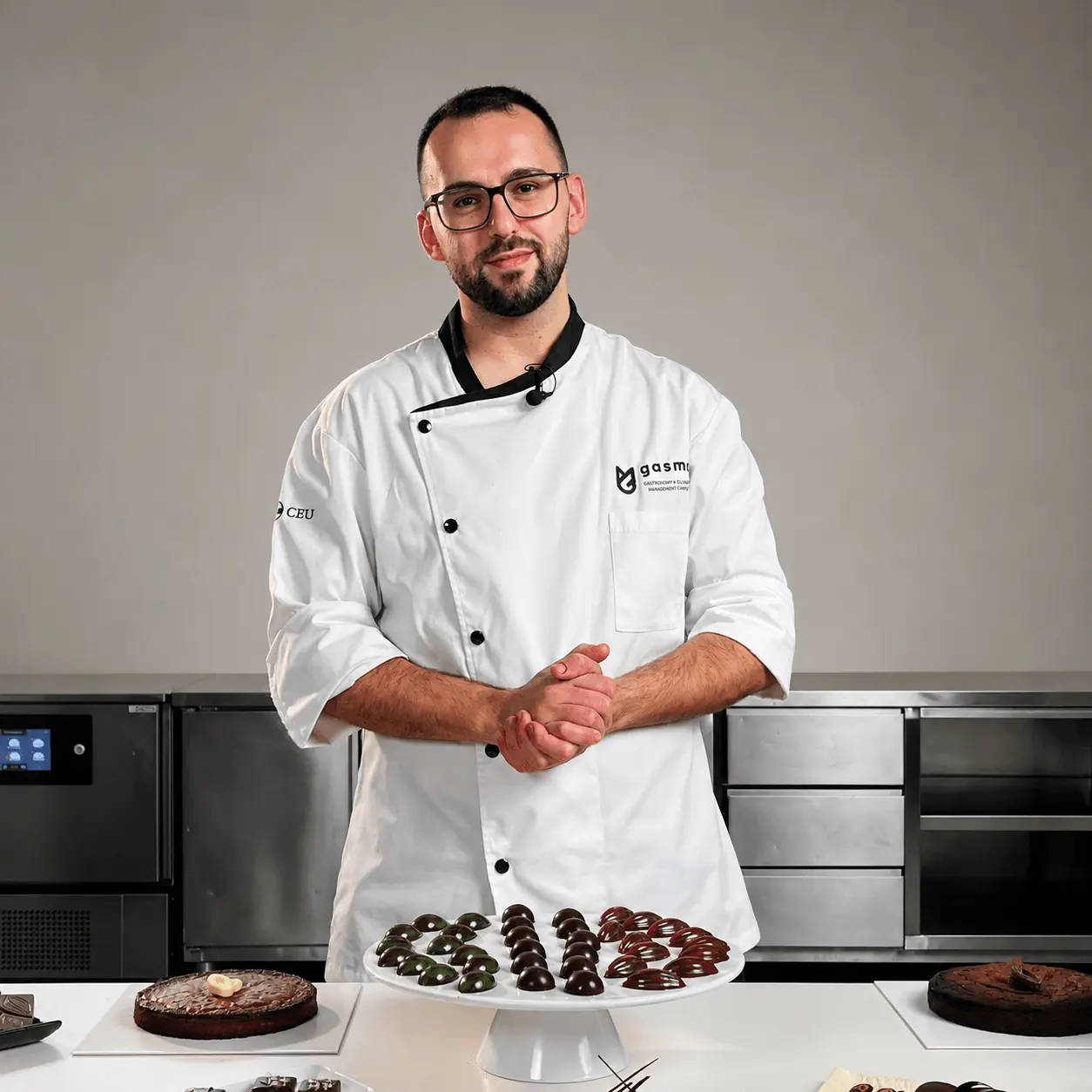
Specialized in avant-garde pastry, formulation and technical processes, he has built his career between haute gastronomy and contemporary pastry, working in kitchens with three Michelin Stars.
With a Master's in Avant-Garde Pastry from Gasma, he has been recognized at national competitions such as Madrid Fusión and the Delité Young Pastry Chefs Competition, where he earned the title of Best Young Pastry Chef in Spain. He now brings that experience to the classroom at Gasma.
Xavi Donnay – Specialist in restaurant desserts and haute cuisine petit fours.
Marc Jordana – Specialist in enzymes, textures and technical applications for restaurant pastry.
Ricard Martínez – Specialist in R&D and creative development of restaurant desserts.
Sergi Vela – Specialist in display case pastry, individual desserts and contemporary product.
Perfect your technique in a 3-Michelin-star restaurant? Create in avant-garde restaurants? Master the sweet side of the kitchen in the best pastry shops?
More than 300 partner agreements await you. Three months at the world's best restaurants, working with elite chefs. You won't just learn techniques: you'll become part of real teams, absorbing the knowledge of those at the top.
An experience that will shape your career.










Find answers to the most common questions about the program.
Yes. It's a good option if you want to steer your profile toward the dessert station, improve your technique in sweet preparations and gain judgment for designing dishes adapted to restaurant service.
You will improve control over textures, temperatures, assembly, finishes and plating. You will also work on building the dessert from the standpoint of flavor balance, presentation and its integration within a menu.
Both are covered. Technique is the foundation for executing with precision, but the diploma also addresses creating desserts, pre-desserts, petit fours, pairings, specialty coffee and new trends in the sweet world.
This diploma does not include curricular internships, but there is the option to complete voluntary extracurricular internships in professional settings connected to the gastronomic sector. To arrange this, you'll need to contact the admissions department, who can give you the details.
You will work on mousses, jellies, entremets, chocolate, bonbon-making, ice cream, sorbets, restaurant desserts, pre-desserts, petit fours and preparations adapted to new demands such as lightened pastry, intolerances or vegan pastry.
It will help you better understand the logic of the dessert station: mise en place, assembly, pass pace, consistency, presentation and adapting the dessert to the restaurant's gastronomic concept.
